
Crown Land Camping in BC: How It Actually Works (and How to Find Good Spots)
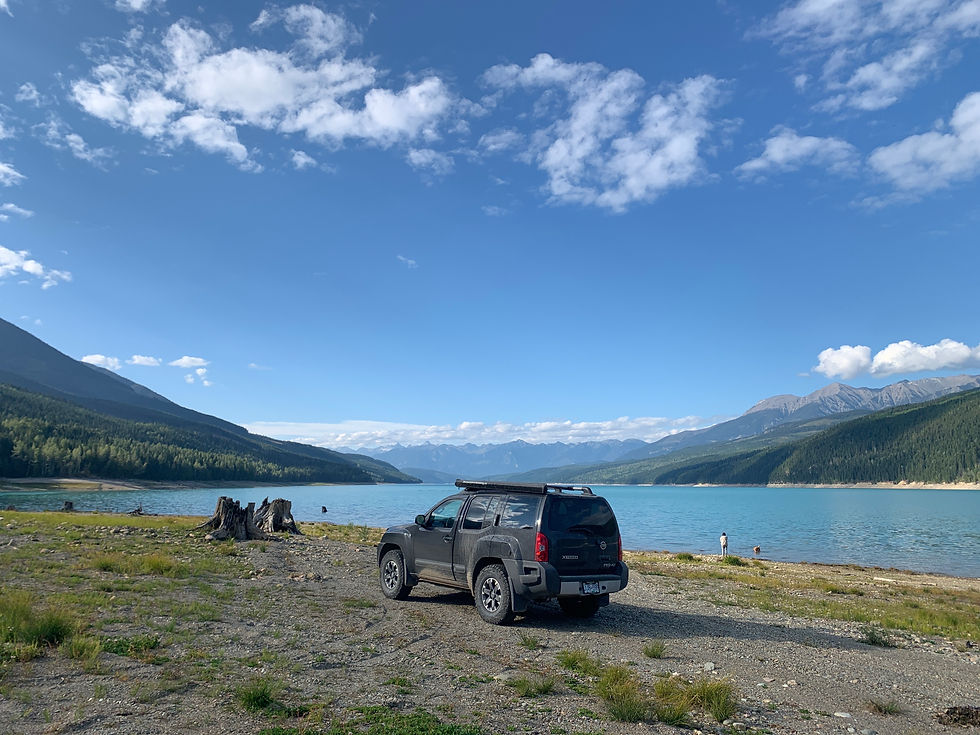
One of the best parts about exploring in BC is how easy it is to just go somewhere and camp. No reservations. No fees. No packed campgrounds. That’s how pretty much all of the routes on this site work. But there are still rules, and more importantly, there’s a right way to do it.
What Crown land actually means
Crown land is land owned by the government. In BC, that’s most of the province. You’re not limited to campgrounds—you just need to know where to look.
Can you just camp anywhere?
Mostly, yes—but with some limits.
In general, you can:
camp for free
stay in one spot for up to 14 days
You shouldn’t:
camp on private land
ignore posted restrictions
treat a spot like it’s permanent
Most people keep it simple: find a spot, stay a night or two, move on. That’s how all of the multi-day routes we write about are done.
How people actually find good spots
There isn’t one perfect map that shows everything.
Most good spots come from a mix of:
1. Driving Forest Service Roads
This is the main way.
If you’re on any of the routes on this blog you’ll see:
pullouts
lakeside clearings
informal campsites
Some are obvious. Some you find by exploring a bit.
2. Recreation sites
These show up along a lot of major FSR routes. They’re a good fallback if you don’t feel like searching around. The Provincial Government of BC maintains an interactive map of recreation sites, found here.
3. Apps
Things like:
iOverlander
Gaia GPS
Google Maps
They help, especially when you’re starting out. But a lot of the better spots—especially on less trafficked routes—aren’t marked. That said, pulling up a satellite view of the route you intend to travel and looking for spots that "might" be good is how we've found the majority of our favourite sites.
What to expect when you get there
No services.
That means:
no toilets (most of the time)
no garbage
no filtered water
This is true whether you’re just outside Vancouver or deep into a longer route. You bring everything in, and you take everything out. Failure to keep these areas clean will result in their closure for us and future generations.
Do you need a 4x4 to access campsites?
Not always. You can reach plenty of spots detailed in this blog (Chehalis North, Harrison West, etc.) without a full 4x4 setup.
But the better, quieter spots usually involve:
rougher roads
side routes off main FSRs
a bit more commitment
Areas people tend to start with (near Vancouver)
If you’re figuring this out for the first time, these are the usual starting points:
Jones Lake
Harrison Lake (west side)
Squamish Valley
We’ve broken these down in separate route guides, including where to find decent camping spots along each.
A few things people underestimate
Wildlife
You’re in bear country. This applies whether you’re 30 minutes from Vancouver or halfway through a longer route. Store food properly.
Fire risk
Especially in summer. Check conditions before heading out—this can change quickly. The Provincial Government of BC maintains an active fire map, found here. Follow all posted fire restrictions.
Road access
A lot of camping depends on FSR access.
And as you’ve probably seen:
those roads change fast
conditions vary a lot
If access gets worse than expected, your camping plans usually change with it.
Final thought
Crown land camping is one of the biggest advantages of living in BC.
It’s what makes all of the routes on this blog work without needing to plan everything in advance. But the tradeoff is responsibility.
If you’re prepared, respectful, and willing to explore a bit, it opens up a completely different kind of travel.


